

Sprinkler systems:
Automatic sprinklers are defined as heat-sensitive devices designed to respond at specific temperatures by discharging the water flow automatically and distributing it in specific shapes and quantities to specific areas, as the sprinklers are fed with water through a network of pipes suspended in the ceilings, and the sprinklers are distributed along the pipes so that they are separated by specific distances. It is divided into different types based on several
aspects:
1.Operation component
Heat-sensitive sprinkler tube
This type of sprinkler uses a broken glass tube, which is made of glass and contains liquid that partially fills the tube, leaving a small air bubble stuck in the tube, and with increasing temperature this liquid expands and compresses the air bubble until it absorbs it at the end, and once that bubble disappears it rises Too much pressure, and the glass tube breaks, releasing the cap that traps the water. · The sprinkler with a thermal fuse
This type of sprinkler uses a metallic alloy that fuses at a specified temperature.
2. Operating temperature range
Normal temperature range (57-77 ° C)
Medium temperature range (79-107 ° C)
High temperature range (121-149 ° C)
Extremely high temperature range (163-191 ° C)
Very high temperature range (204-246 ° C)
Extremely high temperature range (260-302 ° C)
3. Types of response
Standard response
· Rapid Response
This type of sprayers is characterized by the rapid response of the operating element compared to the standard response sprayers, and the response time factor (RTI) is used to express that speed, as the sprayers that have a response time factor equal to or less than 50 (meters per second) 1/2 are classified and obtained The adoption of responsive machine guns as being very responsive.
4. Sprinkler discharge direction
Upward-facing sprinklers
They are defined as sprinklers that are installed with the flow of water directed upwards.
Downward facing sprinklers
They are defined as sprinklers that are installed with the water flow pointing down.
Side sprinklers
They are defined as sprinklers that are installed so that most of the water flow is in the direction away from the wall near it and in the form of a quarter ball, with a small amount of water flowing behind the sprinklers and toward the wall.
5. Decorative sprinklers
In-bore sprinklers (ring)
They are defined as sprinklers that are all or part of a sprinkler socket (ring) except for the serrated end of the sprinklers.
Flat Ring Sprinklers
Defined as sprinklers, all or part of them are mounted above the suspended ceiling, including the serrated end of the sprinklers.
Concealed sprayers
In-bore sprinklers are the same and different from them in that they have caps that completely hide the sprinklers.
6. Sprinklers of special types and applications
Dry sprinklers
They are defined as sprinklers that have plug-in extension joints that prevent water from entering these connections unless the sprinklers are empty.
Open sprinklers
Define these are those sprinklers that do not have a thermal actuation component.
Sprinklers used in residential applications
It is defined as fast response sprayers with a response time factor (RTI) equal to or less than 50 (seconds) 1/2 and which tests have shown its ability to improve the chances of survival in rooms where ignition begins, and has been approved for use in units Residential.
Large diameter droplet sprayers
Defined as those sprinklers that have an conductance factor of 11.2 K in imperial units (160 K in standard units) while the value of that parameter for standard sprinklers with a diameter of هي inch is 5.6 K in proprietary units (80 K in standard units). (deflector) has a special design that enables, at high flow rates, to produce large droplets of large size and velocity, which have the ability to penetrate the upstream generated by the fires which is a great challenge.
Small and large sprinklers
Define that they are those sprinklers that have nozzles less than inch in diameter or more (have a coefficient of conductance of less than or greater than 5.6 K in proprietary units).
Sprinklers with extended coverage
Know that they are those sprinklers that provide more coverage area than standard coverage sprinklers.
Warehouse sprinklers
– Sprinklers whose networks are designed to control fire in a density – area (CMDA) method.
They are defined as those sprinklers that provide control over the fires that occur in storage applications, and their grids are designed in the density-area method referred to in the standard (NFPA 13).
Fire Control Sprinklers Certified for Specific Applications (CMSA)
It is known that they are those sprayers that have the ability to produce large drops, and approved as sprinklers that have the ability to control fires is a great challenge.
ESFR
It is defined as fast response sprinklers that have a response time factor (RTI) equal to or less than 50 (meters. Second) 1/2, and approved as sprinklers that have the ability to extinguish fires, which represent a great challenge.
– Sprayers that are installed in the middle levels of the stores
Know that they are those sprinklers that have a built-in stopper to protect their components from wastewater from sprinklers installed at higher levels.
It is worth noting that all sprinklers, except for open ones, are not designed to extinguish fires, as they either provide control or extinguish the fire, and fire control is defined as limiting the ability of the fire to spread by distributing water with the aim of reducing the rates of heat transfer and exposing the surrounding areas to getting wet with Controlling the temperature of gases that come into contact with roofs to avoid collapsing installations, while fire suppression is defined as the sharp reduction of heat transfer rates from the fire and the prevention of the spread of fire and the rise of flames again, by direct discharging an adequate amount of water onto the flames to reach the burning surfaces. Sprinkler systems are those systems that consist of an integrated network of pipes and are designed according to the standard specifications of fire protection systems that contain a water source, a water lock, a warning device when the water starts flowing, and a water drain. These systems are operated by the heat generated by The fire is used to spray water on the areas where the fire has caught fire, and standard specification No. (NFPA 13) provides the requirements for designing, installing and engaging These systems are considered, and this standard contains several types of sprinkler systems, as follows:
1. Wet Type Sprinkler System
It is a system of sprinklers that includes automatic sprinklers connected to a piping network that contains water and connected to a water source, so that the water is discharged directly from the sprinklers that were triggered by the heat generated by the fire.
2. Dry Type sprinkler system
It is a sprinkler system that includes automatic sprinklers connected to a piping network containing compressed air or nitrogen, so that operating a sprinkler causes the pressure of the water to open a valve known as the dry valve, allowing water to flow through the piping network to the sprinklers that have been triggered.
3. Pre-action sprinkler system
It is a system of sprinklers that includes automatic sprinklers connected to a piping network that contain compressed or non-compressed air, with an additional fire alarm system installed in the same areas where the automatic sprinklers are installed.
4. Deluge Sprinkler System
It is a system of sprinklers that includes open sprinklers or nozzles connected to a piping network connected to the water supply through a valve that is opened by the fire alarm system that is installed in the same areas of installation of those sprinklers or nozzles, so that the water flows into the piping network when the valve is opened and from there to the sprinklers or nozzles. That I empty the water.
Other standard specifications issued by the American Foundation for Fire Protection include a number of systems that include updates to the method of unloading sprinklers to achieve specific goals in the field of fire protection, including directed spray extinguishing systems and water fog extinguishing systems.
Sprinkler systems:
Automatic sprinklers are defined as heat-sensitive devices designed to respond at specific temperatures by discharging the water flow automatically and distributing it in specific shapes and quantities to specific areas, as the sprinklers are fed with water through a network of pipes suspended in the ceilings, and the sprinklers are distributed along the pipes so that they are separated by specific distances. It is divided into different types based on several
aspects:
1.Operation component
Heat-sensitive sprinkler tube
This type of sprinkler uses a broken glass tube, which is made of glass and contains liquid that partially fills the tube, leaving a small air bubble stuck in the tube, and with increasing temperature this liquid expands and compresses the air bubble until it absorbs it at the end, and once that bubble disappears it rises Too much pressure, and the glass tube breaks, releasing the cap that traps the water. · The sprinkler with a thermal fuse
This type of sprinkler uses a metallic alloy that fuses at a specified temperature.
2. Operating temperature range
Normal temperature range (57-77 ° C)
Medium temperature range (79-107 ° C)
High temperature range (121-149 ° C)
Extremely high temperature range (163-191 ° C)
Very high temperature range (204-246 ° C)
Extremely high temperature range (260-302 ° C)
3. Types of response
Standard response
· Rapid Response
This type of sprayers is characterized by the rapid response of the operating element compared to the standard response sprayers, and the response time factor (RTI) is used to express that speed, as the sprayers that have a response time factor equal to or less than 50 (meters per second) 1/2 are classified and obtained The adoption of responsive machine guns as being very responsive.
4. Sprinkler discharge direction
Upward-facing sprinklers
They are defined as sprinklers that are installed with the flow of water directed upwards.
Downward facing sprinklers
They are defined as sprinklers that are installed with the water flow pointing down.
Side sprinklers
They are defined as sprinklers that are installed so that most of the water flow is in the direction away from the wall near it and in the form of a quarter ball, with a small amount of water flowing behind the sprinklers and toward the wall.
5. Decorative sprinklers
In-bore sprinklers (ring)
They are defined as sprinklers that are all or part of a sprinkler socket (ring) except for the serrated end of the sprinklers.
Flat Ring Sprinklers
Defined as sprinklers, all or part of them are mounted above the suspended ceiling, including the serrated end of the sprinklers.
Concealed sprayers
In-bore sprinklers are the same and different from them in that they have caps that completely hide the sprinklers.
6. Sprinklers of special types and applications
Dry sprinklers
They are defined as sprinklers that have plug-in extension joints that prevent water from entering these connections unless the sprinklers are empty.
Open sprinklers
Define these are those sprinklers that do not have a thermal actuation component.
Sprinklers used in residential applications
It is defined as fast response sprayers with a response time factor (RTI) equal to or less than 50 (seconds) 1/2 and which tests have shown its ability to improve the chances of survival in rooms where ignition begins, and has been approved for use in units Residential.
Large diameter droplet sprayers
Defined as those sprinklers that have an conductance factor of 11.2 K in imperial units (160 K in standard units) while the value of that parameter for standard sprinklers with a diameter of هي inch is 5.6 K in proprietary units (80 K in standard units). (deflector) has a special design that enables, at high flow rates, to produce large droplets of large size and velocity, which have the ability to penetrate the upstream generated by the fires which is a great challenge.
Small and large sprinklers
Define that they are those sprinklers that have nozzles less than inch in diameter or more (have a coefficient of conductance of less than or greater than 5.6 K in proprietary units).
Sprinklers with extended coverage
Know that they are those sprinklers that provide more coverage area than standard coverage sprinklers.
Warehouse sprinklers
– Sprinklers whose networks are designed to control fire in a density – area (CMDA) method.
They are defined as those sprinklers that provide control over the fires that occur in storage applications, and their grids are designed in the density-area method referred to in the standard (NFPA 13).
Fire Control Sprinklers Certified for Specific Applications (CMSA)
It is known that they are those sprayers that have the ability to produce large drops, and approved as sprinklers that have the ability to control fires is a great challenge.
ESFR
It is defined as fast response sprinklers that have a response time factor (RTI) equal to or less than 50 (meters. Second) 1/2, and approved as sprinklers that have the ability to extinguish fires, which represent a great challenge.
– Sprayers that are installed in the middle levels of the stores
Know that they are those sprinklers that have a built-in stopper to protect their components from wastewater from sprinklers installed at higher levels.
It is worth noting that all sprinklers, except for open ones, are not designed to extinguish fires, as they either provide control or extinguish the fire, and fire control is defined as limiting the ability of the fire to spread by distributing water with the aim of reducing the rates of heat transfer and exposing the surrounding areas to getting wet with Controlling the temperature of gases that come into contact with roofs to avoid collapsing installations, while fire suppression is defined as the sharp reduction of heat transfer rates from the fire and the prevention of the spread of fire and the rise of flames again, by direct discharging an adequate amount of water onto the flames to reach the burning surfaces. Sprinkler systems are those systems that consist of an integrated network of pipes and are designed according to the standard specifications of fire protection systems that contain a water source, a water lock, a warning device when the water starts flowing, and a water drain. These systems are operated by the heat generated by The fire is used to spray water on the areas where the fire has caught fire, and standard specification No. (NFPA 13) provides the requirements for designing, installing and engaging These systems are considered, and this standard contains several types of sprinkler systems, as follows:
1. Wet Type Sprinkler System
It is a system of sprinklers that includes automatic sprinklers connected to a piping network that contains water and connected to a water source, so that the water is discharged directly from the sprinklers that were triggered by the heat generated by the fire.
2. Dry Type sprinkler system
It is a sprinkler system that includes automatic sprinklers connected to a piping network containing compressed air or nitrogen, so that operating a sprinkler causes the pressure of the water to open a valve known as the dry valve, allowing water to flow through the piping network to the sprinklers that have been triggered.
3. Pre-action sprinkler system
It is a system of sprinklers that includes automatic sprinklers connected to a piping network that contain compressed or non-compressed air, with an additional fire alarm system installed in the same areas where the automatic sprinklers are installed.
4. Deluge Sprinkler System
It is a system of sprinklers that includes open sprinklers or nozzles connected to a piping network connected to the water supply through a valve that is opened by the fire alarm system that is installed in the same areas of installation of those sprinklers or nozzles, so that the water flows into the piping network when the valve is opened and from there to the sprinklers or nozzles. That I empty the water.
Other standard specifications issued by the American Foundation for Fire Protection include a number of systems that include updates to the method of unloading sprinklers to achieve specific goals in the field of fire protection, including directed spray extinguishing systems and water fog extinguishing systems.
Sprinkler systems:
Automatic sprinklers are defined as heat-sensitive devices designed to respond at specific temperatures by discharging the water flow automatically and distributing it in specific shapes and quantities to specific areas, as the sprinklers are fed with water through a network of pipes suspended in the ceilings, and the sprinklers are distributed along the pipes so that they are separated by specific distances. It is divided into different types based on several
aspects:
1.Operation component
Heat-sensitive sprinkler tube
This type of sprinkler uses a broken glass tube, which is made of glass and contains liquid that partially fills the tube, leaving a small air bubble stuck in the tube, and with increasing temperature this liquid expands and compresses the air bubble until it absorbs it at the end, and once that bubble disappears it rises Too much pressure, and the glass tube breaks, releasing the cap that traps the water. · The sprinkler with a thermal fuse
This type of sprinkler uses a metallic alloy that fuses at a specified temperature.
2. Operating temperature range
Normal temperature range (57-77 ° C)
Medium temperature range (79-107 ° C)
High temperature range (121-149 ° C)
Extremely high temperature range (163-191 ° C)
Very high temperature range (204-246 ° C)
Extremely high temperature range (260-302 ° C)
3. Types of response
Standard response
· Rapid Response
This type of sprayers is characterized by the rapid response of the operating element compared to the standard response sprayers, and the response time factor (RTI) is used to express that speed, as the sprayers that have a response time factor equal to or less than 50 (meters per second) 1/2 are classified and obtained The adoption of responsive machine guns as being very responsive.
4. Sprinkler discharge direction
Upward-facing sprinklers
They are defined as sprinklers that are installed with the flow of water directed upwards.
Downward facing sprinklers
They are defined as sprinklers that are installed with the water flow pointing down.
Side sprinklers
They are defined as sprinklers that are installed so that most of the water flow is in the direction away from the wall near it and in the form of a quarter ball, with a small amount of water flowing behind the sprinklers and toward the wall.
5. Decorative sprinklers
In-bore sprinklers (ring)
They are defined as sprinklers that are all or part of a sprinkler socket (ring) except for the serrated end of the sprinklers.
Flat Ring Sprinklers
Defined as sprinklers, all or part of them are mounted above the suspended ceiling, including the serrated end of the sprinklers.
Concealed sprayers
In-bore sprinklers are the same and different from them in that they have caps that completely hide the sprinklers.
6. Sprinklers of special types and applications
Dry sprinklers
They are defined as sprinklers that have plug-in extension joints that prevent water from entering these connections unless the sprinklers are empty.
Open sprinklers
Define these are those sprinklers that do not have a thermal actuation component.
Sprinklers used in residential applications
It is defined as fast response sprayers with a response time factor (RTI) equal to or less than 50 (seconds) 1/2 and which tests have shown its ability to improve the chances of survival in rooms where ignition begins, and has been approved for use in units Residential.
Large diameter droplet sprayers
Defined as those sprinklers that have an conductance factor of 11.2 K in imperial units (160 K in standard units) while the value of that parameter for standard sprinklers with a diameter of هي inch is 5.6 K in proprietary units (80 K in standard units). (deflector) has a special design that enables, at high flow rates, to produce large droplets of large size and velocity, which have the ability to penetrate the upstream generated by the fires which is a great challenge.
Small and large sprinklers
Define that they are those sprinklers that have nozzles less than inch in diameter or more (have a coefficient of conductance of less than or greater than 5.6 K in proprietary units).
Sprinklers with extended coverage
Know that they are those sprinklers that provide more coverage area than standard coverage sprinklers.
Warehouse sprinklers
– Sprinklers whose networks are designed to control fire in a density – area (CMDA) method.
They are defined as those sprinklers that provide control over the fires that occur in storage applications, and their grids are designed in the density-area method referred to in the standard (NFPA 13).
Fire Control Sprinklers Certified for Specific Applications (CMSA)
It is known that they are those sprayers that have the ability to produce large drops, and approved as sprinklers that have the ability to control fires is a great challenge.
ESFR
It is defined as fast response sprinklers that have a response time factor (RTI) equal to or less than 50 (meters. Second) 1/2, and approved as sprinklers that have the ability to extinguish fires, which represent a great challenge.
– Sprayers that are installed in the middle levels of the stores
Know that they are those sprinklers that have a built-in stopper to protect their components from wastewater from sprinklers installed at higher levels.
It is worth noting that all sprinklers, except for open ones, are not designed to extinguish fires, as they either provide control or extinguish the fire, and fire control is defined as limiting the ability of the fire to spread by distributing water with the aim of reducing the rates of heat transfer and exposing the surrounding areas to getting wet with Controlling the temperature of gases that come into contact with roofs to avoid collapsing installations, while fire suppression is defined as the sharp reduction of heat transfer rates from the fire and the prevention of the spread of fire and the rise of flames again, by direct discharging an adequate amount of water onto the flames to reach the burning surfaces. Sprinkler systems are those systems that consist of an integrated network of pipes and are designed according to the standard specifications of fire protection systems that contain a water source, a water lock, a warning device when the water starts flowing, and a water drain. These systems are operated by the heat generated by The fire is used to spray water on the areas where the fire has caught fire, and standard specification No. (NFPA 13) provides the requirements for designing, installing and engaging These systems are considered, and this standard contains several types of sprinkler systems, as follows:
1. Wet Type Sprinkler System
It is a system of sprinklers that includes automatic sprinklers connected to a piping network that contains water and connected to a water source, so that the water is discharged directly from the sprinklers that were triggered by the heat generated by the fire.
2. Dry Type sprinkler system
It is a sprinkler system that includes automatic sprinklers connected to a piping network containing compressed air or nitrogen, so that operating a sprinkler causes the pressure of the water to open a valve known as the dry valve, allowing water to flow through the piping network to the sprinklers that have been triggered.
3. Pre-action sprinkler system
It is a system of sprinklers that includes automatic sprinklers connected to a piping network that contain compressed or non-compressed air, with an additional fire alarm system installed in the same areas where the automatic sprinklers are installed.
4. Deluge Sprinkler System
It is a system of sprinklers that includes open sprinklers or nozzles connected to a piping network connected to the water supply through a valve that is opened by the fire alarm system that is installed in the same areas of installation of those sprinklers or nozzles, so that the water flows into the piping network when the valve is opened and from there to the sprinklers or nozzles. That I empty the water.
Other standard specifications issued by the American Foundation for Fire Protection include a number of systems that include updates to the method of unloading sprinklers to achieve specific goals in the field of fire protection, including directed spray extinguishing systems and water fog extinguishing systems.
Sprinkler systems:
Automatic sprinklers are defined as heat-sensitive devices designed to respond at specific temperatures by discharging the water flow automatically and distributing it in specific shapes and quantities to specific areas, as the sprinklers are fed with water through a network of pipes suspended in the ceilings, and the sprinklers are distributed along the pipes so that they are separated by specific distances. It is divided into different types based on several
aspects:
1.Operation component
Heat-sensitive sprinkler tube
This type of sprinkler uses a broken glass tube, which is made of glass and contains liquid that partially fills the tube, leaving a small air bubble stuck in the tube, and with increasing temperature this liquid expands and compresses the air bubble until it absorbs it at the end, and once that bubble disappears it rises Too much pressure, and the glass tube breaks, releasing the cap that traps the water. · The sprinkler with a thermal fuse
This type of sprinkler uses a metallic alloy that fuses at a specified temperature.
2. Operating temperature range
Normal temperature range (57-77 ° C)
Medium temperature range (79-107 ° C)
High temperature range (121-149 ° C)
Extremely high temperature range (163-191 ° C)
Very high temperature range (204-246 ° C)
Extremely high temperature range (260-302 ° C)
3. Types of response
Standard response
· Rapid Response
This type of sprayers is characterized by the rapid response of the operating element compared to the standard response sprayers, and the response time factor (RTI) is used to express that speed, as the sprayers that have a response time factor equal to or less than 50 (meters per second) 1/2 are classified and obtained The adoption of responsive machine guns as being very responsive.
4. Sprinkler discharge direction
Upward-facing sprinklers
They are defined as sprinklers that are installed with the flow of water directed upwards.
Downward facing sprinklers
They are defined as sprinklers that are installed with the water flow pointing down.
Side sprinklers
They are defined as sprinklers that are installed so that most of the water flow is in the direction away from the wall near it and in the form of a quarter ball, with a small amount of water flowing behind the sprinklers and toward the wall.
5. Decorative sprinklers
In-bore sprinklers (ring)
They are defined as sprinklers that are all or part of a sprinkler socket (ring) except for the serrated end of the sprinklers.
Flat Ring Sprinklers
Defined as sprinklers, all or part of them are mounted above the suspended ceiling, including the serrated end of the sprinklers.
Concealed sprayers
In-bore sprinklers are the same and different from them in that they have caps that completely hide the sprinklers.
6. Sprinklers of special types and applications
Dry sprinklers
They are defined as sprinklers that have plug-in extension joints that prevent water from entering these connections unless the sprinklers are empty.
Open sprinklers
Define these are those sprinklers that do not have a thermal actuation component.
Sprinklers used in residential applications
It is defined as fast response sprayers with a response time factor (RTI) equal to or less than 50 (seconds) 1/2 and which tests have shown its ability to improve the chances of survival in rooms where ignition begins, and has been approved for use in units Residential.
Large diameter droplet sprayers
Defined as those sprinklers that have an conductance factor of 11.2 K in imperial units (160 K in standard units) while the value of that parameter for standard sprinklers with a diameter of هي inch is 5.6 K in proprietary units (80 K in standard units). (deflector) has a special design that enables, at high flow rates, to produce large droplets of large size and velocity, which have the ability to penetrate the upstream generated by the fires which is a great challenge.
Small and large sprinklers
Define that they are those sprinklers that have nozzles less than inch in diameter or more (have a coefficient of conductance of less than or greater than 5.6 K in proprietary units).
Sprinklers with extended coverage
Know that they are those sprinklers that provide more coverage area than standard coverage sprinklers.
Warehouse sprinklers
– Sprinklers whose networks are designed to control fire in a density – area (CMDA) method.
They are defined as those sprinklers that provide control over the fires that occur in storage applications, and their grids are designed in the density-area method referred to in the standard (NFPA 13).
Fire Control Sprinklers Certified for Specific Applications (CMSA)
It is known that they are those sprayers that have the ability to produce large drops, and approved as sprinklers that have the ability to control fires is a great challenge.
ESFR
It is defined as fast response sprinklers that have a response time factor (RTI) equal to or less than 50 (meters. Second) 1/2, and approved as sprinklers that have the ability to extinguish fires, which represent a great challenge.
– Sprayers that are installed in the middle levels of the stores
Know that they are those sprinklers that have a built-in stopper to protect their components from wastewater from sprinklers installed at higher levels.
It is worth noting that all sprinklers, except for open ones, are not designed to extinguish fires, as they either provide control or extinguish the fire, and fire control is defined as limiting the ability of the fire to spread by distributing water with the aim of reducing the rates of heat transfer and exposing the surrounding areas to getting wet with Controlling the temperature of gases that come into contact with roofs to avoid collapsing installations, while fire suppression is defined as the sharp reduction of heat transfer rates from the fire and the prevention of the spread of fire and the rise of flames again, by direct discharging an adequate amount of water onto the flames to reach the burning surfaces. Sprinkler systems are those systems that consist of an integrated network of pipes and are designed according to the standard specifications of fire protection systems that contain a water source, a water lock, a warning device when the water starts flowing, and a water drain. These systems are operated by the heat generated by The fire is used to spray water on the areas where the fire has caught fire, and standard specification No. (NFPA 13) provides the requirements for designing, installing and engaging These systems are considered, and this standard contains several types of sprinkler systems, as follows:
1. Wet Type Sprinkler System
It is a system of sprinklers that includes automatic sprinklers connected to a piping network that contains water and connected to a water source, so that the water is discharged directly from the sprinklers that were triggered by the heat generated by the fire.
2. Dry Type sprinkler system
It is a sprinkler system that includes automatic sprinklers connected to a piping network containing compressed air or nitrogen, so that operating a sprinkler causes the pressure of the water to open a valve known as the dry valve, allowing water to flow through the piping network to the sprinklers that have been triggered.
3. Pre-action sprinkler system
It is a system of sprinklers that includes automatic sprinklers connected to a piping network that contain compressed or non-compressed air, with an additional fire alarm system installed in the same areas where the automatic sprinklers are installed.
4. Deluge Sprinkler System
It is a system of sprinklers that includes open sprinklers or nozzles connected to a piping network connected to the water supply through a valve that is opened by the fire alarm system that is installed in the same areas of installation of those sprinklers or nozzles, so that the water flows into the piping network when the valve is opened and from there to the sprinklers or nozzles. That I empty the water.
Other standard specifications issued by the American Foundation for Fire Protection include a number of systems that include updates to the method of unloading sprinklers to achieve specific goals in the field of fire protection, including directed spray extinguishing systems and water fog extinguishing systems.

The bottle is made of a breakable plastic that poses no danger to the pitcher or other people. The liquid inside will extinguish the flames. Contains 500ml of dibasic ammonium phosphate and ammonium bicarbonate, and has the ability to extinguish ten times of water. However, despite being a chemical, the non-toxic agent is not flammable or prone to explosion, and theoretically it could even be used by the elderly or the young.
read more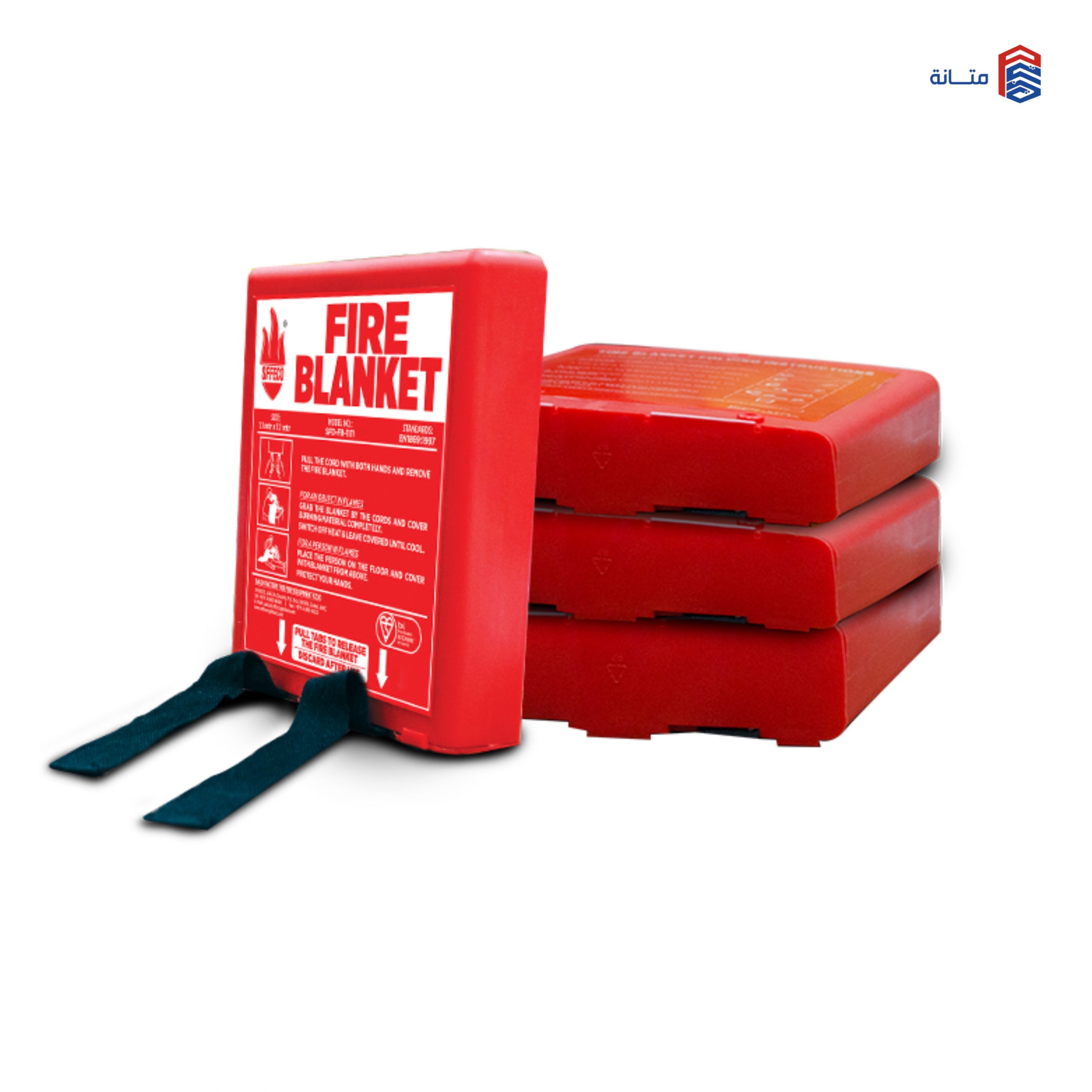
The fire blanket is a cover made of non-combustible cloth, which is used to extinguish the fire according to the fire throttling theory. One of the approved methods of extinguishing is to suffocate the fire by covering it with a fire blanket that prevents oxygen (air) from reaching it, which leads to extinguishing the fire. The blanket is used to extinguish the fires of flammable liquids such as oils, fats, paint, and gasoline, and the fire blanket is one of the easy extinguishing methods that is frequently used in household fires resulting from a gas oven while cooking food.
read more