

The use of carbon dioxide extinguishing systems began since the beginning of the twentieth century, as the first systems were installed during the period between 1910 – 1915 in Europe, and the first version of the standard specifications for carbon dioxide extinguishing systems issued by the American Foundation for Prevention was also issued From the fire in 1929 AD, and the optimal use of carbon dioxide extinguishing systems has many benefits, the most important of which is the safety and security of the users of those systems, which represents the greatest return from those benefits, and the continuous training of the users of these systems also serves that goal, and uses carbon dioxide gas. In extinguishing the fires of inflammable or flammable liquids, gas fires, and the fires of electrically charged equipment, carbon dioxide can also be used to extinguish combustible materials, while this gas is not used to extinguish the fires of combustible metals, metallic hydrides, and materials that contain the necessary oxygen. For the combustion process, the physiological effects associated with the use of carbon dioxide on human health limit their ability to absorb Servants in the field of firefighting, as well as the limitations posed by the nature of the risks themselves. Nevertheless, carbon dioxide gas is a preferred fire medium in many applications due to the following characteristics:
1. Not flammable
2. It does not interact with most substances
3. It does not need other gas to push it out of the cylinder
4. It has a high ability to penetrate and spread in the danger area
5. Non-conductive
6. Leaves no residue or stains
Carbon dioxide gas can be stored in the liquid state inside the vessels with high pressure, and its temperature in this case is subject to change depending on the ambient temperature of those vessels, and it can also be stored in refrigerated vessels at a temperature of (-18) ° C (0 ° F) Due to the effect of low gas temperature on its flow rate during system emptying, the temperature for high pressure systems ranges between 0 ° to 49 ° C (32 ° to 120 ° F), and on the other hand, the effect of low temperature on low pressure systems will not appear. Except when the temperature of the gas drops below (-23) ° (-10 ° F), and harsh climatic conditions may impose additional requirements. In winter, and in the case of using high pressure systems, the temperature of the gas inside the vessels must be maintained within the previously mentioned limits. In the case of low-pressure systems, heaters and pumps are used to circulate, and carbon dioxide gas during the evacuation of the system has a cloudy white appearance due to the fine dry ice particles that form during this process, and an additional cloud is also formed as a result of condensation of water vapor. It is mentioned that dry snow particles and system sprinklers have the ability to carry static electrical charges, and these charges may lead to exposure to electric shocks, or explosions due to the ignition of the surrounding gaseous environment, and to avoid this, all sprinklers must be grounded, and carbon dioxide gas when used in Local fire extinguishing systems remove and isolate air from the burning surfaces due to its greater density than air, and carbon dioxide plays a role in regulating the breathing process in humans, as the respiratory rate increases with the increase in the percentage of carbon dioxide in the blood, and this continues until it reaches Its percentage in the air is 7%, and with exceeding that percentage, the respiratory rate decreases until it reaches between 17% to 30%. Respiration stops immediately, and since the minimum concentration of carbon dioxide in the air necessary to extinguish the fire exceeds the 7% threshold, the use of equipment And following safety precautions is very important in all fire extinguishing systems using carbon dioxide gas, and carbon dioxide gas extinguishes the fire either by suffocation by reducing the percentage of oxygen required for ignition, or by cooling the burning material The ability of carbon dioxide to extinguish Class (A) fires is limited due to its relatively low cooling capacity, and the ability of the place to maintain the extinguishing concentration, and carbon dioxide gas can extinguish fires of burning surfaces, while non-surface fires may require (deep) A higher concentration of gas, and a longer period of time to achieve full extinguishing, and some of these fires cannot be extinguished at all by using carbon dioxide gas even with an increase in the time period for a long period, and in such a case carbon dioxide gas is used to extinguish the burning flames and control the spread This process extends until the arrival of well-equipped and trained firefighting teams to deal with these fires, and carbon dioxide gas is used in the fire extinguishing systems with total immersion by discharging a sufficient amount of gas in a sealed place to be a non-combustible medium, while the gas is discharged Carbon dioxide directly on the burning surfaces without the slightest reliance on the sealing of the place or not in local fire extinguishing systems, and other methods of discharging gas are available such as manual hose systems, and the system Pipe stalemates, extended vacuum system, and mobile fire extinguishing equipment, in addition to other types, and Standard Specification No. (NFPA12) issued by the American Foundation for Fire Protection includes provisions that guarantee the safety of people and the preservation of life when using carbon dioxide extinguishing systems, as an example It is prohibited to use a total immersion system using carbon dioxide gas in areas where occupants are naturally present, and this rule has exceptions, as it is allowed to use the total immersion system using carbon dioxide gas in those areas if they contain electrical equipment charged with a voltage exceeding 400 volts or electric cables It is stacked in the form of groups unless an alternative gas extinguishing medium has been approved for this purpose, provided that measures are taken to ensure the evacuation of the occupants before the operation of emptying the system, and as another example, all carbon dioxide extinguishing systems must be equipped with shutoff valves. As for fire alarm systems, the All systems except for the manual hose extinguishing system, need to provide an audible and visual warning before discharging the gas, and warning signs should be placed outside your L Places using a total carbon dioxide immersion system.
The components of a carbon dioxide system generally include the following:
1- Carbon dioxide gas cylinders
There are two types of cylinders: high pressure cylinders – low pressure cylinders.
2- Pipes
Either their diameters can be calculated manually or by a computer program to perform hydraulic calculations that comply with (NFPA12) requirements for different types of carbon dioxide systems.
3- Valves and actuators
It should be able to withstand the maximum pressure in addition to being sealed and non-leaking, with the advantage of manual and automatic operation.
4- Sprinklers
Either it is fast flow sprayers or low flow velocity sprayers.
5- Control systems
The systems include three types of control, automatic operation, normal manual operation, and emergency manual operation.
6- Control Panel
The detectors and the manual pull switch are connected to this panel, so that pulling the operating hand or the detectors triggers the audible and visual alarm devices through the panel, and (NFPA12) requires a time delay before emptying and pre-emptying alarms so that both operate with air pressure, provided that is applied Retrospectively to include in most carbon dioxide extinguishing systems.
7- Warning
In general, audible and visual alarms are required in most CO2 systems.
Carbon dioxide extinguishing system stored in high pressure vessels
System features:
It is characterized as non-conductive to electricity, non-corrosive to surfaces, and it is a clean extinguishing medium in that it leaves neglected effects after emptying the system
Suitable for use on Class A, B and C fires
UL certified, and designed according to the requirements of Standard No. (12) issued by the American Foundation for Fire Protection
Offers a wide range of cylinder capacities options that can be loaded with gas quantities ranging from 2 kg to 100 kg (4.4 lb to 220 lb)
The gas storage technology in high pressure vessels [58 bar (850 psi) at 21 ° C (70 ° F)] provides the ability to install cylinders away from the danger zone, allowing the optimum utilization of valuable space within these areas.
It provides a wide range of permissible temperatures around cylinders from -18 ° C to 54.4 ° C (0 ° F to 130 ° F)
The pipe diameters of the gas discharge network are determined by a computer program dedicated to performing hydraulic calculations, which leads to reliable results.
The use of carbon dioxide extinguishing systems began since the beginning of the twentieth century, as the first systems were installed during the period between 1910 – 1915 in Europe, and the first version of the standard specifications for carbon dioxide extinguishing systems issued by the American Foundation for Prevention was also issued From the fire in 1929 AD, and the optimal use of carbon dioxide extinguishing systems has many benefits, the most important of which is the safety and security of the users of those systems, which represents the greatest return from those benefits, and the continuous training of the users of these systems also serves that goal, and uses carbon dioxide gas. In extinguishing the fires of inflammable or flammable liquids, gas fires, and the fires of electrically charged equipment, carbon dioxide can also be used to extinguish combustible materials, while this gas is not used to extinguish the fires of combustible metals, metallic hydrides, and materials that contain the necessary oxygen. For the combustion process, the physiological effects associated with the use of carbon dioxide on human health limit their ability to absorb Servants in the field of firefighting, as well as the limitations posed by the nature of the risks themselves. Nevertheless, carbon dioxide gas is a preferred fire medium in many applications due to the following characteristics:
1. Not flammable
2. It does not interact with most substances
3. It does not need other gas to push it out of the cylinder
4. It has a high ability to penetrate and spread in the danger area
5. Non-conductive
6. Leaves no residue or stains
Carbon dioxide gas can be stored in the liquid state inside the vessels with high pressure, and its temperature in this case is subject to change depending on the ambient temperature of those vessels, and it can also be stored in refrigerated vessels at a temperature of (-18) ° C (0 ° F) Due to the effect of low gas temperature on its flow rate during system emptying, the temperature for high pressure systems ranges between 0 ° to 49 ° C (32 ° to 120 ° F), and on the other hand, the effect of low temperature on low pressure systems will not appear. Except when the temperature of the gas drops below (-23) ° (-10 ° F), and harsh climatic conditions may impose additional requirements. In winter, and in the case of using high pressure systems, the temperature of the gas inside the vessels must be maintained within the previously mentioned limits. In the case of low-pressure systems, heaters and pumps are used to circulate, and carbon dioxide gas during the evacuation of the system has a cloudy white appearance due to the fine dry ice particles that form during this process, and an additional cloud is also formed as a result of condensation of water vapor. It is mentioned that dry snow particles and system sprinklers have the ability to carry static electrical charges, and these charges may lead to exposure to electric shocks, or explosions due to the ignition of the surrounding gaseous environment, and to avoid this, all sprinklers must be grounded, and carbon dioxide gas when used in Local fire extinguishing systems remove and isolate air from the burning surfaces due to its greater density than air, and carbon dioxide plays a role in regulating the breathing process in humans, as the respiratory rate increases with the increase in the percentage of carbon dioxide in the blood, and this continues until it reaches Its percentage in the air is 7%, and with exceeding that percentage, the respiratory rate decreases until it reaches between 17% to 30%. Respiration stops immediately, and since the minimum concentration of carbon dioxide in the air necessary to extinguish the fire exceeds the 7% threshold, the use of equipment And following safety precautions is very important in all fire extinguishing systems using carbon dioxide gas, and carbon dioxide gas extinguishes the fire either by suffocation by reducing the percentage of oxygen required for ignition, or by cooling the burning material The ability of carbon dioxide to extinguish Class (A) fires is limited due to its relatively low cooling capacity, and the ability of the place to maintain the extinguishing concentration, and carbon dioxide gas can extinguish fires of burning surfaces, while non-surface fires may require (deep) A higher concentration of gas, and a longer period of time to achieve full extinguishing, and some of these fires cannot be extinguished at all by using carbon dioxide gas even with an increase in the time period for a long period, and in such a case carbon dioxide gas is used to extinguish the burning flames and control the spread This process extends until the arrival of well-equipped and trained firefighting teams to deal with these fires, and carbon dioxide gas is used in the fire extinguishing systems with total immersion by discharging a sufficient amount of gas in a sealed place to be a non-combustible medium, while the gas is discharged Carbon dioxide directly on the burning surfaces without the slightest reliance on the sealing of the place or not in local fire extinguishing systems, and other methods of discharging gas are available such as manual hose systems, and the system Pipe stalemates, extended vacuum system, and mobile fire extinguishing equipment, in addition to other types, and Standard Specification No. (NFPA12) issued by the American Foundation for Fire Protection includes provisions that guarantee the safety of people and the preservation of life when using carbon dioxide extinguishing systems, as an example It is prohibited to use a total immersion system using carbon dioxide gas in areas where occupants are naturally present, and this rule has exceptions, as it is allowed to use the total immersion system using carbon dioxide gas in those areas if they contain electrical equipment charged with a voltage exceeding 400 volts or electric cables It is stacked in the form of groups unless an alternative gas extinguishing medium has been approved for this purpose, provided that measures are taken to ensure the evacuation of the occupants before the operation of emptying the system, and as another example, all carbon dioxide extinguishing systems must be equipped with shutoff valves. As for fire alarm systems, the All systems except for the manual hose extinguishing system, need to provide an audible and visual warning before discharging the gas, and warning signs should be placed outside your L Places using a total carbon dioxide immersion system.
The components of a carbon dioxide system generally include the following:
1- Carbon dioxide gas cylinders
There are two types of cylinders: high pressure cylinders – low pressure cylinders.
2- Pipes
Either their diameters can be calculated manually or by a computer program to perform hydraulic calculations that comply with (NFPA12) requirements for different types of carbon dioxide systems.
3- Valves and actuators
It should be able to withstand the maximum pressure in addition to being sealed and non-leaking, with the advantage of manual and automatic operation.
4- Sprinklers
Either it is fast flow sprayers or low flow velocity sprayers.
5- Control systems
The systems include three types of control, automatic operation, normal manual operation, and emergency manual operation.
6- Control Panel
The detectors and the manual pull switch are connected to this panel, so that pulling the operating hand or the detectors triggers the audible and visual alarm devices through the panel, and (NFPA12) requires a time delay before emptying and pre-emptying alarms so that both operate with air pressure, provided that is applied Retrospectively to include in most carbon dioxide extinguishing systems.
7- Warning
In general, audible and visual alarms are required in most CO2 systems.
Carbon dioxide extinguishing system stored in high pressure vessels
System features:
It is characterized as non-conductive to electricity, non-corrosive to surfaces, and it is a clean extinguishing medium in that it leaves neglected effects after emptying the system
Suitable for use on Class A, B and C fires
UL certified, and designed according to the requirements of Standard No. (12) issued by the American Foundation for Fire Protection
Offers a wide range of cylinder capacities options that can be loaded with gas quantities ranging from 2 kg to 100 kg (4.4 lb to 220 lb)
The gas storage technology in high pressure vessels [58 bar (850 psi) at 21 ° C (70 ° F)] provides the ability to install cylinders away from the danger zone, allowing the optimum utilization of valuable space within these areas.
It provides a wide range of permissible temperatures around cylinders from -18 ° C to 54.4 ° C (0 ° F to 130 ° F)
The pipe diameters of the gas discharge network are determined by a computer program dedicated to performing hydraulic calculations, which leads to reliable results.
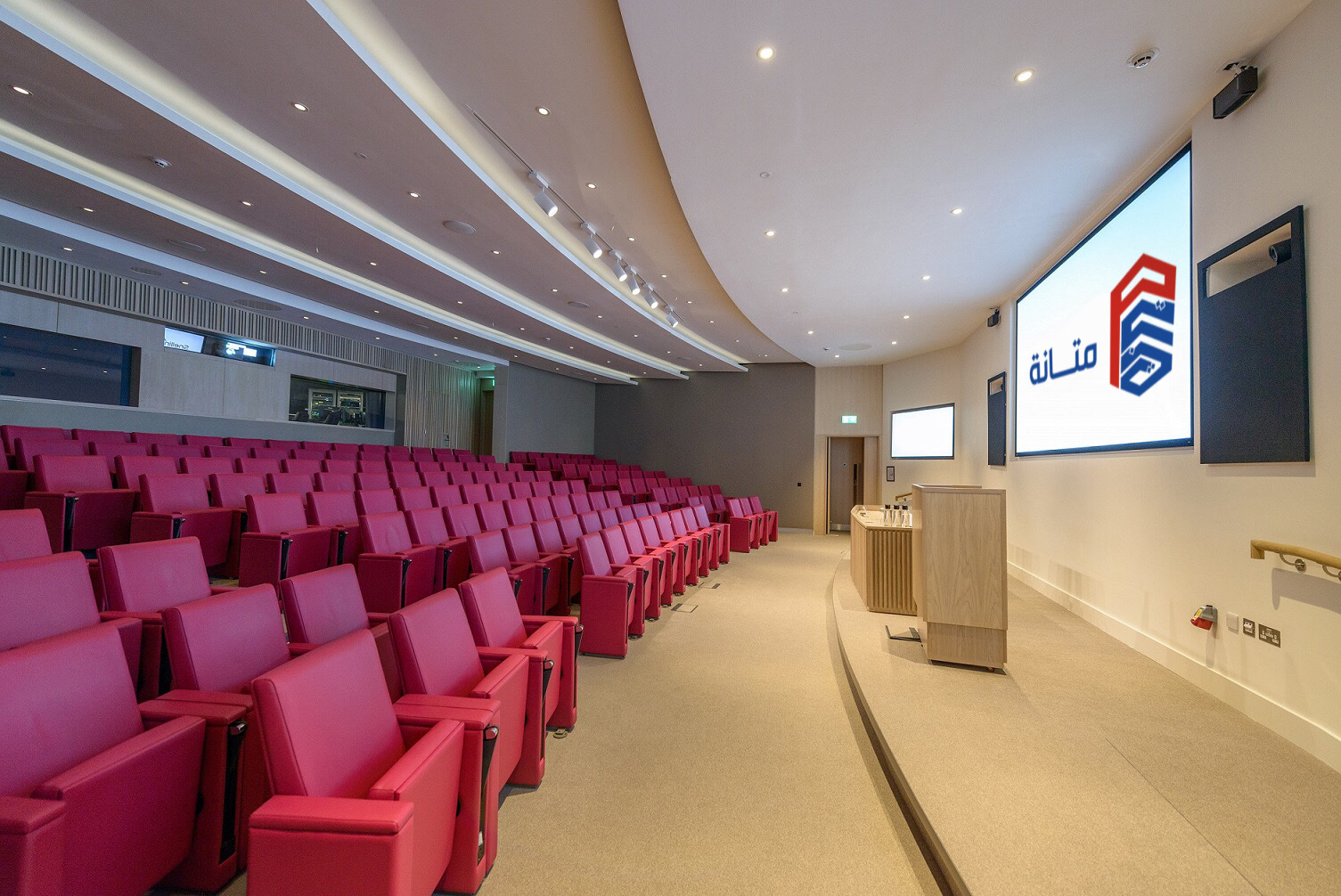
Free service: If you are responsible for Hotel + hospital + factory + school + gym We offer you a free lecture at your places given by a specialist on the following topics: - 1- Security and safety inside the facility. 2- How to deal with alarm and extinguishing devices. 3- How to properly handle fires. * The lecture is free of charge.
read more
The function of the pump is to deliver a high-pressure stream of water to the stalagmites connected to the water sprinklers and fire hoses. Fire pump testing is being checked by international authorized agencies such as UL or FM.
read more